Introduction
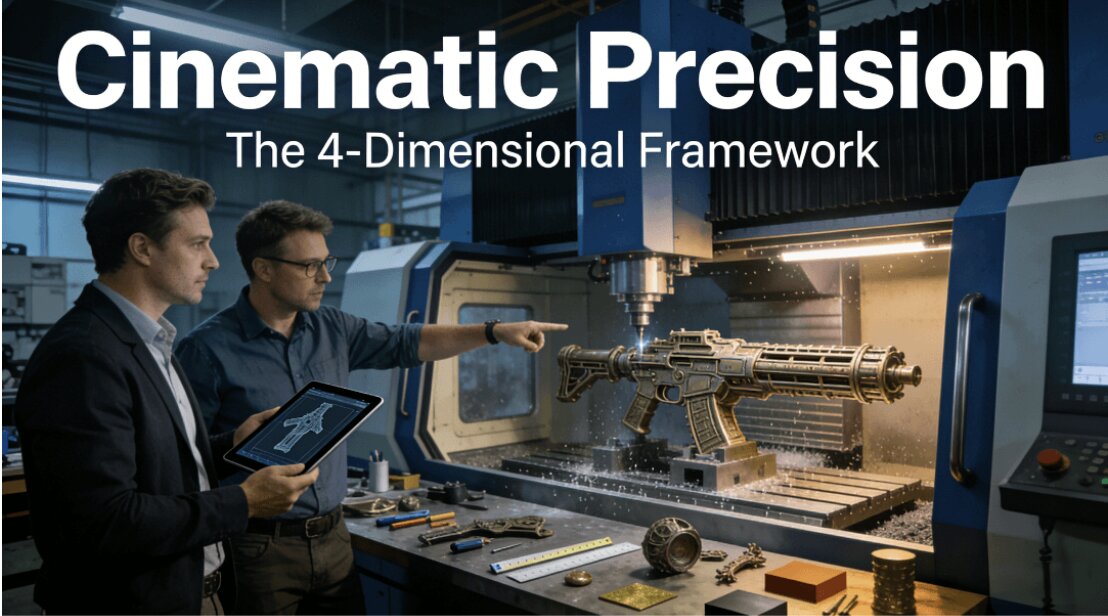
In high-end film production, the physical magic often relies on customized CNC milling services — from replica historical artifacts to futuristic robotic camera rigs. However, production teams are frequently beset by costly failures: outsourced components have invisible assembly errors that cause emergency on-set shutdowns; lightweight structural parts fail during dynamic shots; and, most damagingly, unreleased designs or proprietary schematics leak within the supply chain, causing immeasurable creative and commercial loss. This turns a strategic hardware investment into a project’s greatest vulnerability.The root cause is a procurement model built on price and lead time alone. Studios often lack a systematic framework to evaluate a manufacturing supplier’s true technical depth, quality consistency, IP protection protocols, and collaborative resilience. Entrusting “Cinematic Precision” to luck or verbal promises is an unacceptably high risk. This article introduces a four-dimensional assessment framework tailored for the creative industries, transforming supplier selection from an administrative task into a strategic creative engineering activity that safeguards both the art and the budget.
Dimension One: Beyond the Machine List — How to Verify a Supplier’s Real “Creative Engineering” Problem-Solving Ability?
Technical capability for film is not about owning machines; it’s about mastering the unique triad of aesthetic form, functional performance, and material innovation. The challenges are specific: sculpting complex organic surfaces for hero props, achieving structural lightness with strength in stunt rigging, and machining micron-toleranced moving parts for animatronics. Evaluation must move beyond a brochure. Require tangible proof: ask for surface finish reports (Ra values) on parts with similar aesthetic contours. Request their material-specific machining database for lightweight alloys like 7075 aluminum, showing proven parameters and tool life. Critically, audit their 5-axis CNC capability to ensure they can machine multi-angle features in a single setup, preserving artistic detail and avoiding the misalignment errors inherent in multiple fixturings.
1. Auditing for Aesthetic and Functional Mastery
The proof is in the portfolio and the data. A competent partner will provide case studies that demonstrate both visual fidelity and mechanical integrity. They should be able to explain how they compensated for tool deflection when milling a thin-walled helmet or how they selected a specific toolpath strategy to achieve a required brushed-metal finish. This depth of applied engineering knowledge is what separates a job shop from a true creative manufacturing partner. A systematic OEM framework for technical CNC milling partner selection can provide the structured checklist needed to conduct this audit thoroughly, ensuring no critical capability is overlooked.
2. Validating Mastery of Advanced Production Techniques
Film manufacturing often pushes the boundaries of standard practice. Whether it’s machining a delicate wax prototype for molding or a high-temperature composite for a practical effect, the supplier must demonstrate adaptability. Their technical team should speak confidently about chatter suppression, thermal management, and specialized workholding for unconventional shapes. This expertise is rarely advertised; it is revealed through probing questions about past challenges and their engineered solutions. Partnering with a team that views each new design as a unique engineering puzzle rather than a standard job is essential for success.
3. Building a Foundation for Creative Collaboration
Therefore, the first dimension assesses a potential for partnership, not just purchase. The right supplier acts as an extension of your art department and engineering team. They ask insightful questions about the part’s function, on-set environment, and post-processing needs. This collaborative, problem-solving mindset is the most valuable technical asset a supplier can offer. It ensures that the manufacturing process is aligned with the creative vision from the very first conversation, paving the way for a smooth journey from digital model to flawless physical asset.
Dimension Two: Does an ISO Certificate Guarantee Every Prop and Part is Flawless?
A quality certificate documents a system’s existence; the shop floor must prove its vitality. For film, where every take is costly, consistency cannot be a hope — it must be a predictable, data-driven output. While ISO 9001 establishes a baseline management system, the film industry requires evidence of granular process control. For a metal prop requiring precise weathering, the consistency of the underlying machined surface is critical. This is where statistical process control comes in: live SPC charts monitoring key dimensions during a production run provide an objective, real-time view of process stability, preventing a bad batch before it’s made.
1. Implementing Traceability and Digital Provenance
In film, every part has a “digital twin” and needs a physical provenance. A robust supplier provides comprehensive First Article Inspection Reports and implements a digital traceability system. This could involve QR codes linking each physical component to its inspection data, CAM program, and material certification. This level of traceability is standard in highly regulated industries. Suppliers certified to IATF 16949 (automotive) or AS9100D (aerospace) are audited on this rigorous documentation and control, offering a built-in assurance that their systems are designed for “zero-defect” culture and full accountability.
2. Bridging the Gap Between System and Surface
Quality for film is both dimensional and aesthetic. A supplier’s quality system must extend to surface finish validation and visual inspection protocols. How do they ensure the 100th hero prop has the identical sheen and texture as the first? This often involves standardized lighting checks, controlled sample matching, and documented approval processes. The goal is to eliminate subjective “it looks good” judgments and replace them with objective, repeatable quality standards that ensure seamless continuity across all units, whether for a single hero piece or a run of stunt multiples.
3. Ensuring Predictable Outcomes Through Systemic Control
Thus, evaluating the second dimension means looking for a culture of prevention. Ask to see a live SPC chart. Inquire about their Non-Conformance Report process and how corrective actions are implemented. The answers reveal whether quality is an ingrained discipline or a post-production inspection. The ultimate goal is a partnership where you have certified confidence in every delivery. This confidence is built on the supplier’s ability to consistently produce precision CNC milling parts that meet both the technical drawing and the unspoken demands of cinematic presentation, shot after shot, take after take.
Dimension Three: How to Build a “Creative Firewall” Against IP Leaks in Global Collaboration?
In the entertainment industry, intellectual property is the crown jewel. A data breach of an unreleased character design or set piece can be catastrophic, undermining marketing and competitive advantage. Protecting this IP requires a multi-layered security framework that transcends a simple Non-Disclosure Agreement. The assessment must cover legal, technical, and physical controls. Legally, a robust, mutually executed NDA with clear IP ownership clauses is the absolute minimum. Technically, the supplier must demonstrate secure, encrypted file transfer systems, role-based access controls for sensitive data, and automated data purging protocols post-project. Physically, their facility should have controlled access and visitor management.
- Establishing a Culture of Confidentiality: Security is as much about people as it is about technology. Evaluate the supplier’s employee training on confidentiality and their policy on personal devices in production areas. A serious partner will treat your project with the same discretion they would afford a defense or medical client. This cultural commitment to secrecy is often reflected in broader operational certifications and is a critical foundation for trust. It signals that they understand the unique sensitivity of creative content and have institutionalized its protection.
- Leveraging Industry Standards for Assurance: While there is no “film industry security certification,” proven standards provide a reliable proxy. A supplier that invests in and maintains certifications related to information security management demonstrates a systemic approach to risk. Their operational maturity in documented processes, access control, and business continuity planning directly translates to a more secure environment for your pre-release assets. This due diligence is non-negotible for building studio partnerships where open collaboration doesn’t mean open risk.
- Creating a Secure Foundation for Open Collaboration: Paradoxically, strong security enables freer collaboration. When you are confident your designs are protected, you can share more context, engage in deeper technical film solutions discussions, and treat the supplier as a true creative partner. Selecting a partner with impeccable security credentials and a transparent protocol removes a major barrier to the free flow of information needed to solve complex manufacturing challenges, fostering a more innovative and efficient media industry collaboration.
Dimension Four: How to Decode a Quote and Assess True “Project Resilience”?
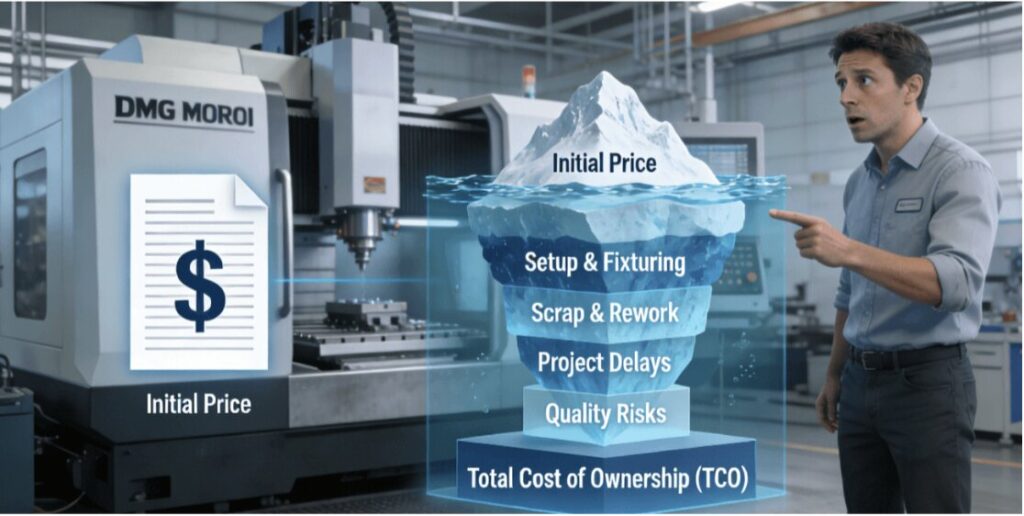
A transparent quote is a financial X-ray of a supplier’s competence and honesty. For film, it must also reveal their capacity for agile, collaborative resilience in the face of inevitable “creative pivots.” A comprehensive CNC milling commercial evaluation requires deconstructing the quote into clear line items: material cost, programming, machine time, custom fixturing, surface finishing, and project management. A lowball quote may exclude the cost of a complex fixture needed for an organic shape or the specialized PVD coating required for a specific look, leading to massive budget overruns later.
1. Analyzing for Hidden Costs and Value Engineering
Scrutinize the basis of all estimates. Is machine time derived from a verified database? Does the quote include a risk buffer or contingency for design changes, which are commonplace in film? A valuable partner will provide a value-engineering analysis, suggesting design modifications that reduce cost without compromising intent. This collaborative cost efficiency approach focuses on Total Cost of Production, not just the unit price, aligning both parties on the shared goal of delivering maximum value within the budget.
2. Evaluating Operational and Supply Chain Resilience
“Project resilience” is a supplier’s ability to adapt. What is their capacity planning like? Can they handle a last-minute, 50% increase in volume for a stunt sequence? How diverse and robust is their supply chain for specialty materials? Do they have backup machining capacity? Their answers to these stress-test questions reveal operational maturity. Certifications like ISO 14001, while environmental, also indicate a disciplined, forward-thinking management system that plans for stability and continuity — key traits of a resilient partner.
3. Selecting a Partner, Not a Vendor
Therefore, the commercial dimension is ultimately about partnership potential. A supplier that provides a detailed, educational quote and openly discusses risks and contingencies is signaling a culture of transparency and collaboration. They are investing in a shared understanding. By applying this disciplined financial and operational lens, you empower your production to make sourcing decisions that ensure not just a part, but a successful, on-budget, on-schedule outcome, turning a procurement function into a strategic pillar supporting the creative vision.
Conclusion
At the intersection of cinematic art and precision engineering, success is defined by systematic collaboration, not solitary excellence. Moving supplier selection from a price comparison to a holistic, four-dimensional evaluation — spanning technical mastery, certified quality, ironclad security, and commercial resilience — is the only reliable way to transform groundbreaking designs into dependable physical reality. This framework provides the strategic toolkit to build partnerships that protect your intellectual property, your budget, and your schedule, ensuring the only surprises on set are the ones you meticulously planned for.
FAQs
Q: We only need a small batch of prototype props. Is such a complex evaluation necessary?
A: For prototypes, the process can be streamlined, but the core dimensions are non-negotiable. Focus on technical feasibility validation and IP protection. Even for one piece, require proof of capability and a strong NDA. A simplified assessment should test the supplier’s understanding of your unique needs and rapid response capability, preventing costly design errors in the prototype phase that become exponentially more expensive to fix later.
Q: How can I evaluate a CNC shop’s real-world experience with “lightweight materials”?
A: Demand concrete case evidence. Ask for photos, videos, and data from actual parts made from materials like magnesium, titanium, or high-strength aluminum. Inquire about their specific strategies to prevent issues like magnesium fire or thin-wall distortion. True expertise is shown in a mature, documented process library for these materials, not just a claim of capability.
Q: For complex organic shapes, is 3D printing always better than CNC milling?
A: Not necessarily. The choice depends on the final requirements for material, strength, precision, and surface finish. CNC milling typically offers superior strength and finish in metals and engineering plastics, which is vital for functional props. 3D printing excels at internal lattices. The best approach is often hybrid: 3D print for form, CNC mill for function. A skilled partner should provide an objective analysis to determine the optimal process for your specific part and its use case.
Q: How can I quickly assess a supplier’s reliability for an urgent project?
A: In a crisis, prioritize evaluating “project resilience.” Directly ask about current capacity and assign a dedicated point of contact. Gauge their communication speed and transparency — can they provide preliminary DFM feedback and a rough timeline within hours? A reliable partner for urgent needs has efficiency built into their standard processes, not derived from chaotic last-minute effort.
Q: Do film suppliers need in-house capabilities for special finishes like aging or coloring?
A: They do not need all capabilities in-house, but they must have a managed, qualified network and the expertise to oversee quality. The key is whether they can act as a single point of accountability, managing the full workflow from machining to finishing. They should understand how processes like anodizing or plating affect tolerances and appearance and provide final inspection to ensure the part meets the Art Director’s specifications exactly.
Author Bio
This article is based on the specialized expertise of precision manufacturing professionals with extensive experience bridging the worlds of advanced engineering and creative film production. For production teams and studio technologists preparing for a mission-critical physical effects project and seeking a partner equipped to deliver both cinematic precision and absolute reliability, a structured capability review is the essential first step. LS Manufacturing is a certified precision manufacturing partner that embodies this integrated approach, combining IATF 16949 and AS9100D certified systems with deep technical expertise to serve as a secure, high-performance extension for film studios and creative technologists navigating the most demanding design-to-physical challenges.