
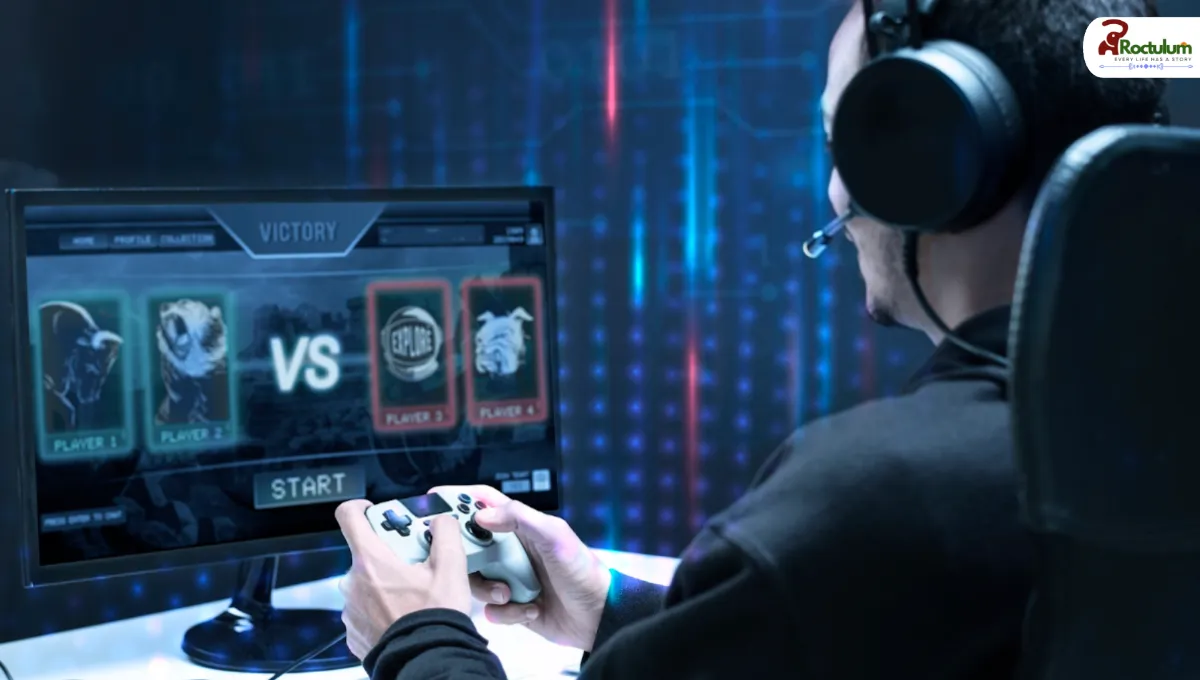
Television spent seven decades building a one-way relationship with its audience. You sat down, the program played, you watched. The power dynamic was clear: producers decided what existed, broadcasters distributed it, viewers received it. Interactivity was limited to changing channels or, eventually, setting a recording timer. For most of that history, nobody questioned whether this model could be improved, because the technology to improve it simply did not exist. What is happening now across the media landscape is not a refinement of that model. It is a replacement.
The replacement has not arrived in one dramatic moment but as an accumulation of smaller shifts that quietly rearranged what audiences expect from any screen-based experience. The first shift was the ability to pause and rewind live television. The second was streaming on demand. The third – currently underway – is the integration of genuine interactivity into what previously would have been purely broadcast experiences. When live casino immersive roulette studios began operating at broadcast quality, employing production directors alongside game managers and treating the studio as a continuous live program rather than a functional backdrop, they were not merely upgrading a product. They were piloting a format that sits directly at the intersection of television production and interactive entertainment – demonstrating that audiences respond to that combination in ways neither medium achieves separately.
What broadcast brought to interactive entertainment
The broadcast contribution to interactive gaming is perhaps the more surprising one to trace. Game design had traditionally focused on systems – the rules, mechanics, reward structures. Presentation was secondary, and the assumption was that users who understood the system would be satisfied regardless of how it was wrapped. Broadcast professionals, working in a medium where presentation is everything, understood something different: that the same content delivered well or badly produces dramatically different emotional responses, and emotional response is what drives return behavior.
This insight, applied to interactive platforms, produced a new category of production role: the experience director, responsible not for the mechanics of a game but for the gestalt quality of being inside it. Camera sequencing, tempo management, the timing of ambient sound changes relative to on-screen action – these broadcast skills now appear in game studio teams. The results are environments that feel composed rather than assembled.
A skilled live host for an interactive platform needs capabilities that neither a traditional game dealer nor a television presenter typically has. They must manage the mechanics of an activity while maintaining natural, warm engagement with a camera that creates the illusion of personal connection with thousands of simultaneous viewers. It is a specific skill set the industry is still developing formal training frameworks for.
| Media dimension | Traditional broadcast | Traditional interactive gaming | Converged format |
| Audience role | Passive viewer | Active participant | Simultaneously both |
| Temporal structure | Fixed schedule or on-demand | Session-based | Continuous, joinable anytime |
| Presenter function | Storyteller or journalist | None or functional | Engagement anchor |
| Visual production | Broadcast-grade studio | Functional interface | Studio-quality interactive set |
| Audience feedback | Ratings, delayed | Immediate, behavioral | Real-time, consequential |
What interactive brought to broadcast thinking
The influence running in the other direction operated on a different axis. Interactive gaming contributed something broadcast never fully solved: real stakes. Watching a game show contestant win money is engaging. Being the contestant is a different category of experience entirely. Interactive formats moved the audience from observer to participant, changing the emotional register of the whole experience.
This has influenced how broadcast producers think about engagement even in contexts that remain nominally passive. The language of interactive design – session design, reward loops, re-engagement triggers – has migrated into broadcast production thinking in ways that would have seemed alien ten years ago.
The data dimension is perhaps the most consequential import. Interactive platforms generate behavioral data at a granularity broadcast ratings systems cannot approach. A broadcaster knows approximately how many people watched a segment and when they changed channels. An interactive platform knows the precise moment each user made each decision, which actions preceded dropout, and which sequences produced the longest sessions. This data advantage feeds back into product improvement at a speed and specificity that traditional broadcast cannot match.
Where the formats are headed
The trajectory of convergence suggests that the distinction between broadcast and interactive will continue to erode in both directions. Sports broadcasting is already incorporating real-time prediction elements. News formats are experimenting with audience-driven editorial emphasis. The purely passive broadcast experience is becoming the exception.
For interactive gaming platforms, broadcast lessons around production quality and presenter performance are becoming table stakes rather than differentiators. The next competitive dimension is probably narrative continuity – the ability to create a sense of ongoing story across sessions that gives returning users something to look forward to beyond the mechanics of the activity. This is a broadcast competency that interactive design has barely begun to exploit, which suggests that the convergence still has significant distance left to travel.